This section investigates the impact of the relationship between non-Western art and Modernism on art market trends. While the arts of Africa will be the primary lens because of their prevailing impact on Modernism, discussions of Oceanic and pre-Columbian art will be included as well. Together, the art of these cultures was called “primitive art” for much of the 20th century, a term that is now understood to be derogatory for its association with racist views of crudeness and simplicity.
Behind the Modern Canon
It is widely known that the Modernists were heavily inspired by non-Western arts, especially African art, which was coming directly from the continent to Paris. Looking closer at some of these examples really shows just how much of a pictorial language they mimicked.
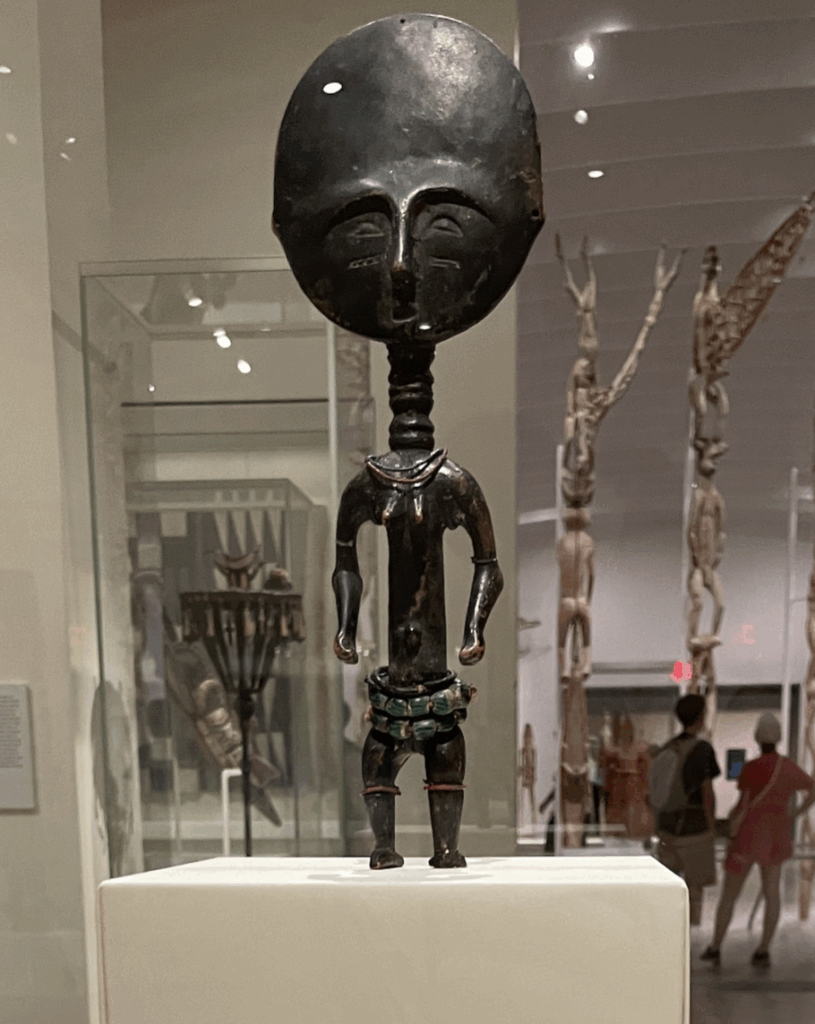
Picasso vs. Akua ‘ba

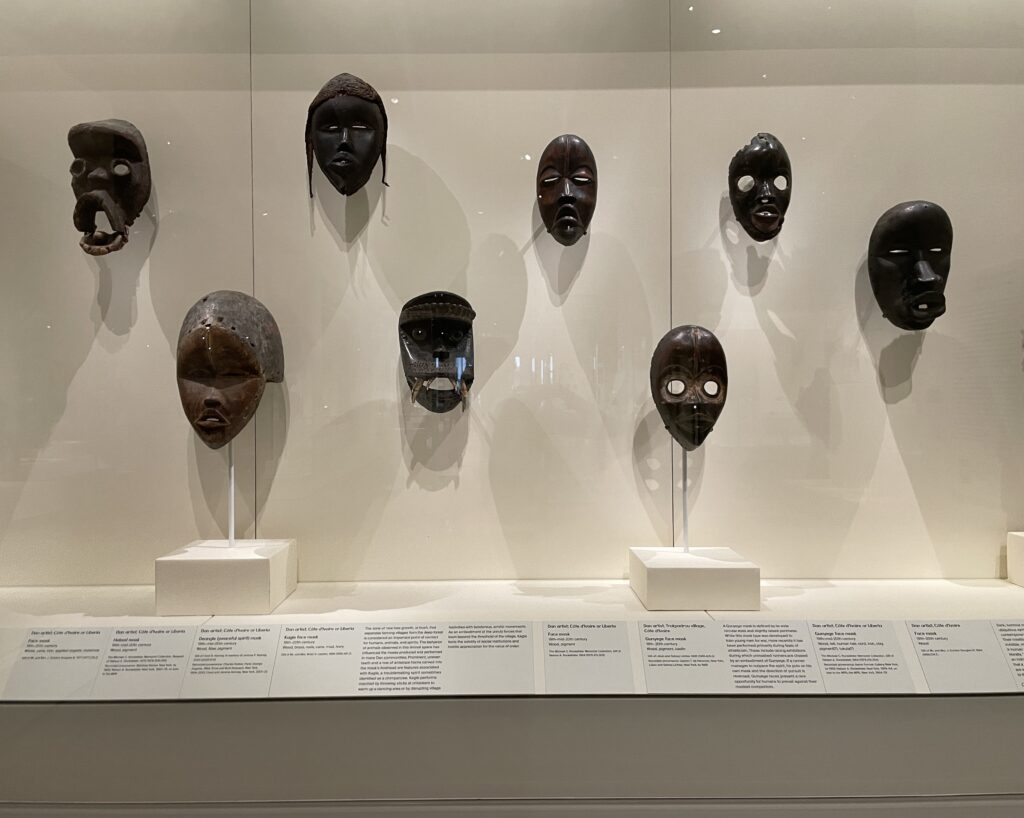
Modigliani vs. Dan Masks

Matisse vs. Nkisi N’Kondi


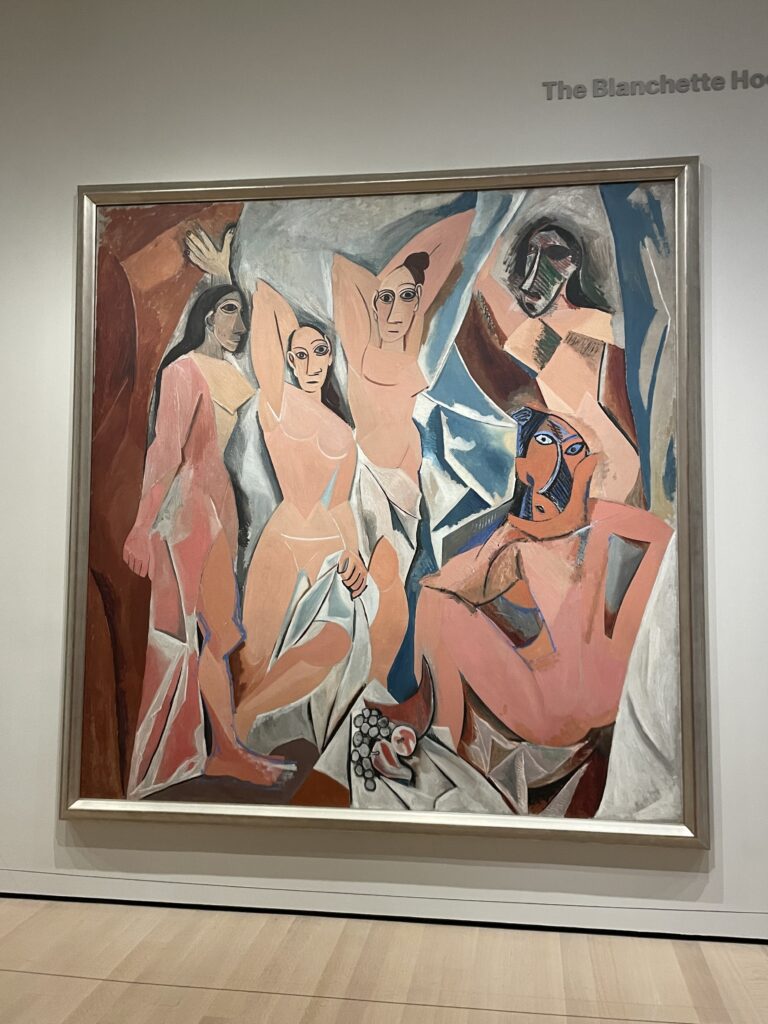
Picasso vs. Mbanga
Brâncuși vs. Oceanic sculpture

In the Museum
Museums are the highest authority in the art world. The market seeks their validation: buyers often want to donate their collections to preserve their legacies, and if an artwork has been featured in a museum exhibit it tends to increase in monetary value. Thus, examining how museums have presented non-Western art over time must be illuminating to how it has been sold.
The Early 20th Century
Picasso-Braque Exhibition, 1915, 291 gallery

Influential artist and gallerist Alfred Stieglitz held an exhibition of Pablo Picasso and Georges Braque’s work in 1915, not long after introducing it to America for the first time. Stieglitz believed that abstraction was the future of modern art, perhaps explaining why he included works of African art (such as the Kota reliquary figure seen here) and archaic Mexican pottery and stonework, both of which depend heavily on geometric and stylized imagery rather than realism.
Primitive Negro Art, Chiefly from the Belgian Congo, 1923, Brooklyn Museum

In 1923, the Brooklyn Museum held one of the first exhibitions promoting the artistic qualities of African art. Of the 1,400 works shown, little was explained of their origins, functions, and significance, in turn creating an unnuanced and monolithic view of the continent. Indeed, images of the exhibition appear more like an ethnographic museum than an art one, where objects are grouped by type and appearance without wall text. The curator, Stewart Culin, wrote that the art “may be considered as inspired by fresh and direct observation of nature,” which may explain its resonance with Modernist artists.
Diego Rivera, 1932, The Museum of Modern Art

At the same time works of classical African art were being shown by museums, there was a rising interest in contemporary Latin American painting. The second solo show at the Museum of Modern Art was of murals by Diego Rivera, and the exhibition broke attendance records, far surpassing the previous show of works by Henri Matisse. Despite this apparent gap in exhibitions for Ancient American art, many Latin American artists, including Rivera, were inspired by these Indigenous arts. Flower Festival, one of the works shown at Rivera’s MoMA show, takes inspiration from Aztec art: the overall composition takes the form of a divine stone figure’s face, and the women’s compressed poses at the bottom of the painting mimic a stylized, figural relief carving.
American Sources of Modern Art (Aztec, Mayan, Incan), 1933, The Museum of Modern Art

It seems as though the interest in showing Ancient American art followed the proven success of contemporary Latin American artists. A 1933 exhibition at The Museum of Modern Art utilized Ancient American artworks primarily from anthropological and university collections, indicating the view of the objects as artifacts rather than aesthetic objects. The lens of the exhibition was these artworks’ influence on contemporary art, and as such, recent paintings were shown in the galleries. The artists included were both American and Latin American, in contrast to the Modernist works in African galleries that solely originated from colonizing countries.
African Negro Art, 1935, The Museum of Modern Art

The Museum of Modern Art was another institution that followed the trend of showing African art. In 1935, curator James Johnson Sweeney travelled to Europe to select works of African art from private and museum collections. The exhibition press release pointed out the Modernists’ inspiration from African art, saying it demonstrated their respect for it. It also described what seemed to be an evolving understanding of these art forms by introducing their variety of spiritual and utilitarian functions. At the same time, the exhibition did not appear to be organized by any sort of cultural context; objects were placed in a white cube space, and that was the extent of the show.
The Later 20th Century
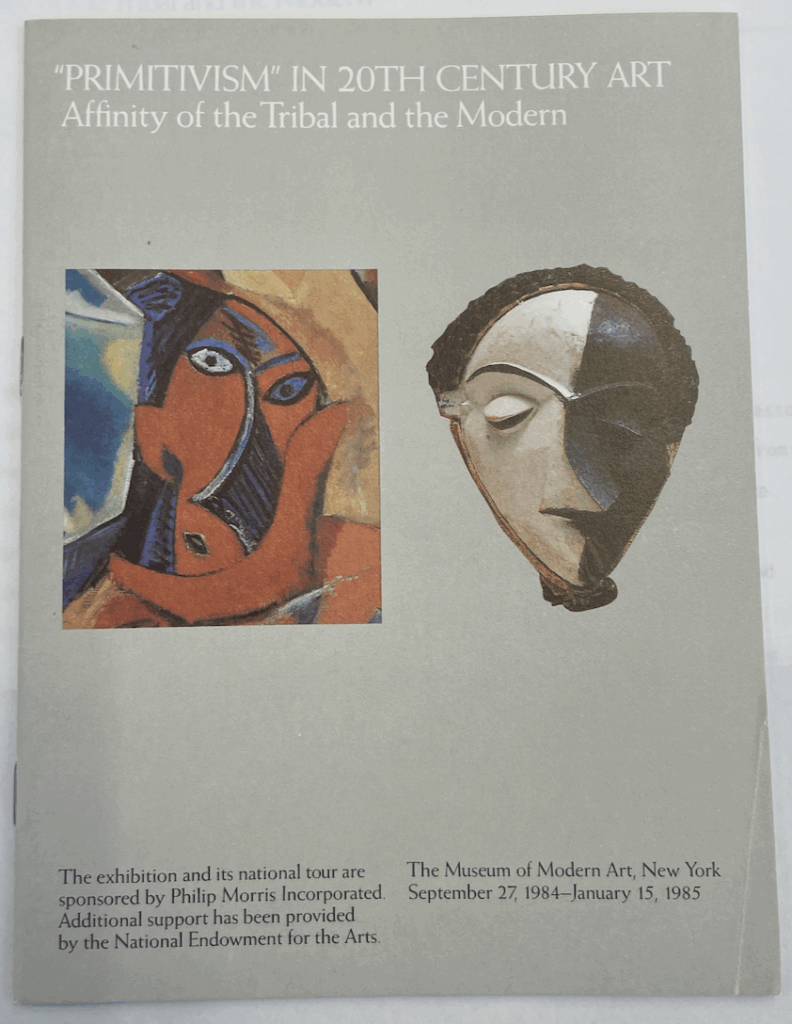
“Primitivism” in 20th Century Art: Affinity of the Tribal and the Modern, 1984, The Museum of Modern Art

In 1984, The Museum of Modern Art had an exhibit called “‘Primitivism’ in 20th Century Art: Affinity of the Tribal and the Modern” which positioned African and Oceanic artworks alongside Modernist works familiar to any art history novice. The presentation of the African artworks was sterile and static, removing them from their original contexts and instead using them to highlight Western works. For example, two D’mba masks, which in Baga culture are traditionally masqueraded and worn on one’s head with a raffia costume to honor mature women, face inwards to frame yet another nude female Picasso bust. At least four African artworks were formerly in the collection of Picasso himself, including a D’mba mask insured at $1,000,000, an estimate so high above all the other ones that it can only be explained by the object’s proximity to Picasso and then later the Musée Picasso.
Africa: The Art of a Continent, 1996, Solomon R. Guggenheim Museum

In 1996, “Africa: The Art of a Continent” caused a resurgence in the market for African art. But, the curator was transparent in his aim to remove African works from their cultural contexts as to not “‘beat people over the head with the idea of Africa.’” Here, he was effectively whitewashing and ignoring history, and collecting trends followed it.
The 21st Century
The Metropolitan Museum of Art, Michael C. Rockefeller Wing, New York, 2025
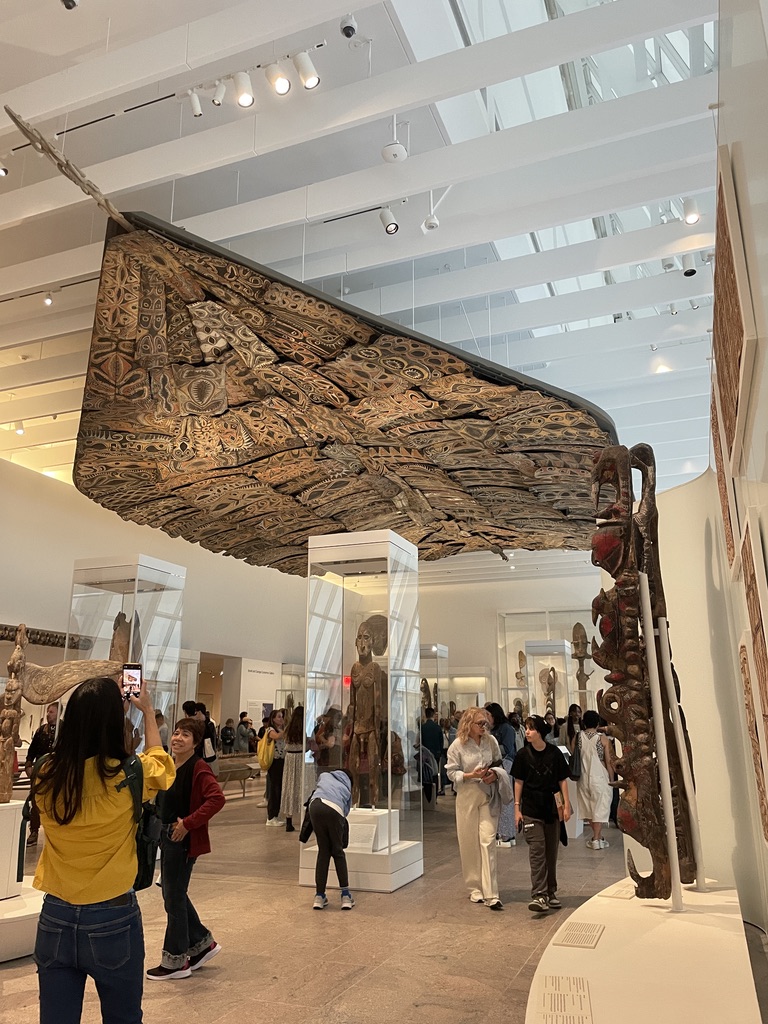

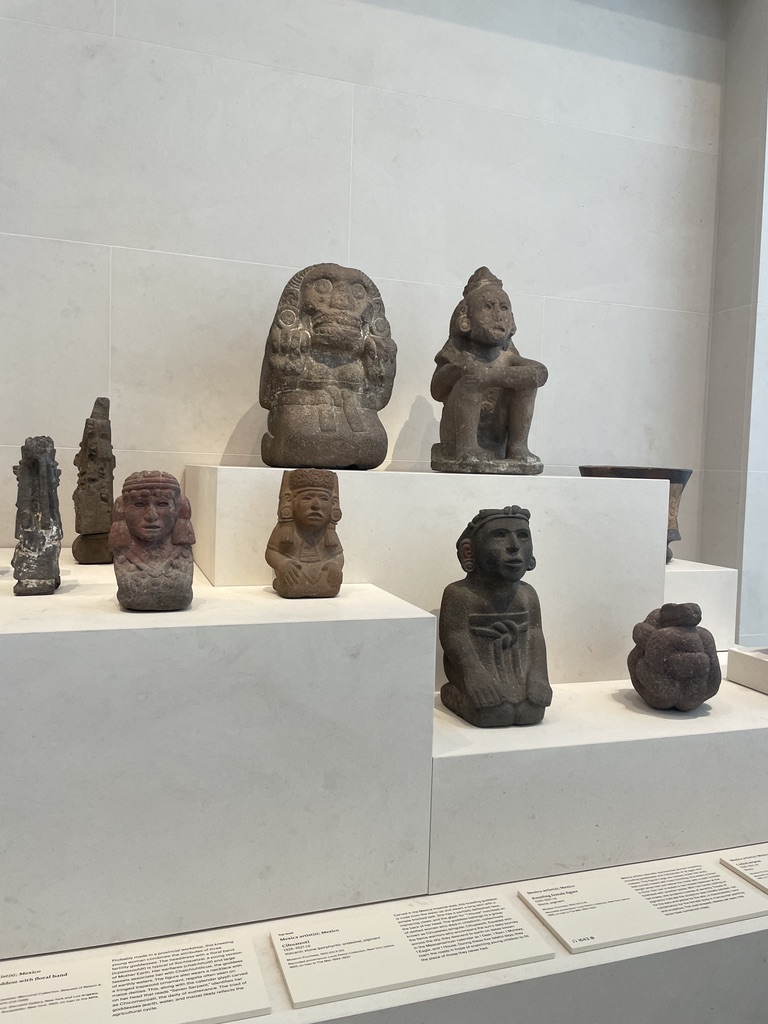
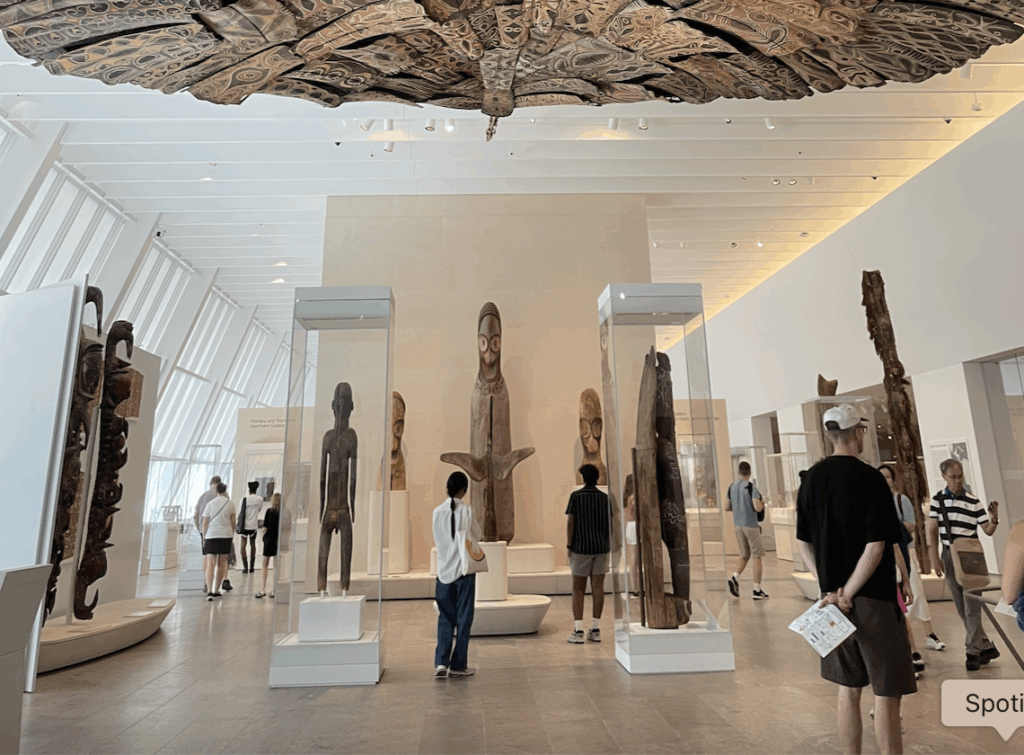
In May of 2025, The Metropolitan Museum of Art unveiled its new Rockefeller Wing after a four year renovation. These galleries are devoted to the arts of Africa, Oceania, and Ancient America, named after a Rockefeller who donated his collection to The Met to start a new department. In a pleasant surprise, the exhibition breaks many of the problematic practices of its predecessors. The arts are organized by region and culture, with detailed information about any divine beings represented. Instead of primarily discussing aesthetic qualities, cultural significance is explained, with much emphasis on ritual and performance; video screens are frequent throughout the Africa gallery, depicting the displayed masks in use. Examples of some of the pieces’ influences on modern art are mentioned but not foregrounded, and conveyed in terms of what the African culture brought to modern art, rather than what Europe took from the African culture. The Rockefeller Wing flows freely into the Modern and Contemporary Art Wing, subtly suggesting their connection, however it was disappointing seeing no mention of the canonical modern artist’s influence from non-Western art in those galleries.
A Conversation with Architect Kulapat Yantrasast and Met Director Max Hollein, May 31, 2025
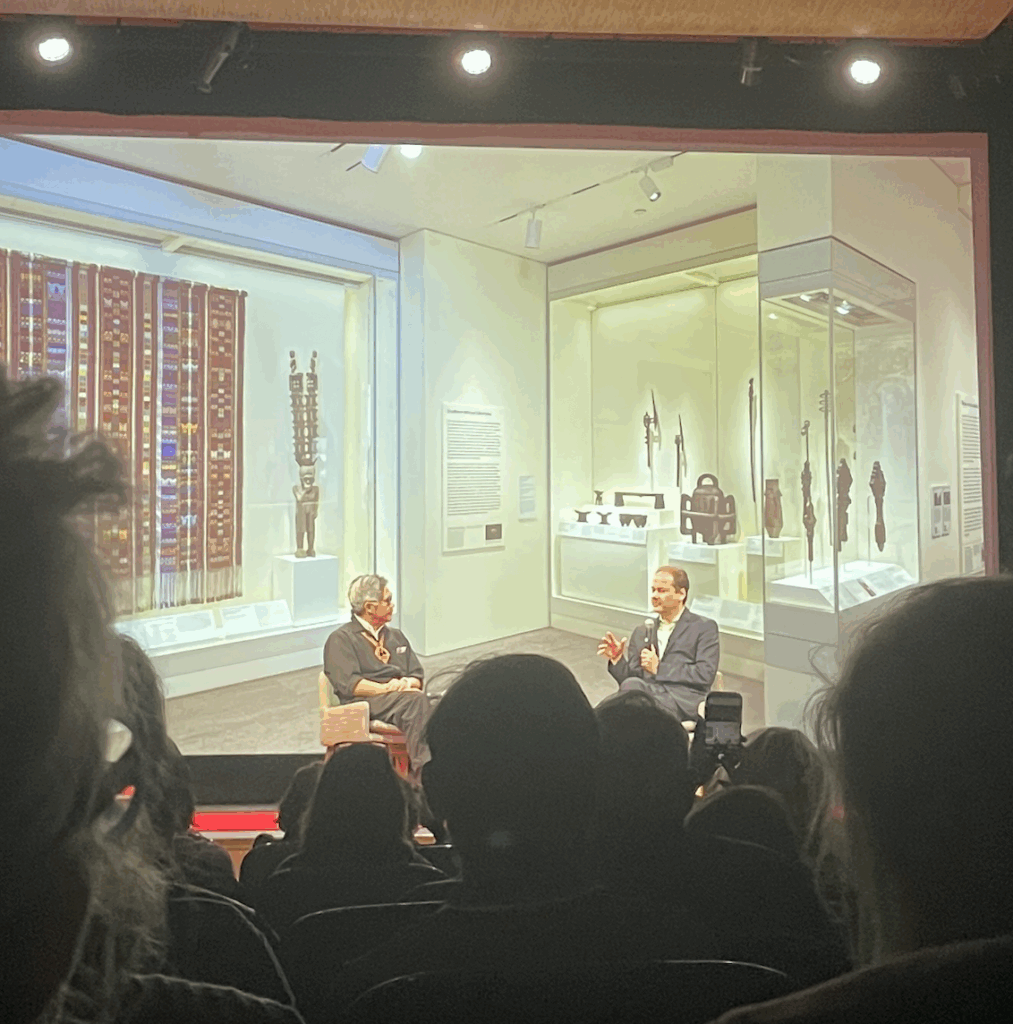
It is disheartening that African, Oceanic, and Ancient American art are still grouped together at The Met–they are separate continents, united by their common status in the West as “primitive.” Yet, if this is not subject to change, architect Kulapat Yantrasast still found ways to be more true to the objects’ histories in his renovation of the Rockefeller Wing. In contrast to the traditional practice of displaying non-Western art in dramatic spot lights, he emphasized natural lighting with large windows overlooking Central Park to be true to the art’s original contexts of being made and used in natural light. His African gallery was inspired by the Great Mosque of Djenné in its processional feel when moving through it, the Latin American gallery was modeled after Ancient America’s large architectural spaces that were used for gathering, and the Oceanic gallery flows between the other two as a connector while centering around a ceremonial Kwoma roof that is the site of the culture’s primary artistic endeavors.
The American Museum of Natural History, New York, 2025


Other museums show a less evolved understanding of non-Western art. In true ethnographic fashion, galleries are devoted to African, Asian, Oceanic, and Indigenous American cultures, where they organize and categorize different aspects of Indigenous life. Dim lighting creates a sense of drama or entertainment, while elaborate displays are lit up behind glass without specific information about their origins. Leaning further into this ambiance, the South American Peoples galleries even have jungle noises playing. These curatorial choices can be critiqued even further when considering the postcolonial theory presented by Timothy Mitchell in “Orientalism and the Exhibitionary Order.” Mitchell discusses how Europe puts itself in the naturalized center, meanwhile othering people from the “Orient” to justify colonial aims; while the “Orient” traditionally refers to people from Asia, the same ideas can be applied to people from other countries who were historically subjected in the same way. Mitchell describes “world-as-exhibition,” where foreign art is presented as an ethnographic spectacle that conveys their people as objects to be viewed, while Europeans are in the position to investigate them and in turn claim them, thus creating a power imbalance. The AMNH even goes so far as to put life-sized figures behind the glass, so that they are statically and voyeuristically positioned alongside their “exotic” arts.
On the Market
A look at the market for non-Western arts from the early 20th century to the present with an informed analysis of its trends.

At the beginning of the 20th century, African art was predominantly sought after by ethnographic collections and artists, indicating it was collected on a basis of curiosity and novelty. However, this “othering” justifies colonial exploitation, looting, and the depersonalization of cultural heritage. Indeed, commercial routes only reached America in these days through European channels, especially French and Belgian colonies, meaning original contexts were lost along the way. In fact, artists such as Picasso usually did not even distinguish between African and Oceanic art when collecting. This serves as an explanation for why African artworks in this era were exhibited through the lens of Modernist works, or on their own in an ethnographic organization.
The first major auctions for the arts of Africa, Oceania, and the Americas occurred in the 1960s. A catalog from Plaza Fine Art Auctioneers in 1967 reveals that pre-Columbian art had higher prices on average than African art, and interestingly, it was grouped in a sale with Persian art, whereas in the 70s it would be sold with other “primitive” art. The African art was not organized by any method, as cultures and object types were mixed together, reminiscent of early exhibitions.
In the 1970s and 80s, the relative value of African art increased, with multiple auction catalogs from both decades estimating around 20 pieces in their sales at prices over £1,000. Adjusted for inflation and exchange rates, this number equated $9,938 in 1978 and $4,643 in 1988, so while there seemed to be a decrease in value in the 80s, that is not entirely true. A Christie’s catalog from 1988, a few years after “Primitivism” in 20th Century Art at The Museum of Modern Art, listed high-value works at prices higher than those in the 70s. The work with the highest estimate was valued at $69,675-$116,125, and two were estimated in the $37,159-$46,448 range (adjusted for inflation). This trend indicates the existence of “masterpieces” now; when non-Western works are placed besides canonical artists, they are implicitly molded into a canon as well. In the style of an art historical visual analysis, lots from the 1988 catalog have literal descriptions of the objects’ compositions, where the French word “coiffure” is used frequently, in addition to other Western-oriented language such as “carved scrolls” (a classical architecture feature). Much seems to have been interpreted with bias: a description for a Yoruba Gelede mask says, “The daggers carved in pairs on each side of the looped headgear denote that the person represented is a seducer, and for that reason he carries daggers with which to protect himself from jealous husbands.” In reality, these masks are performed by men to honor women, who are considered the most powerful beings, above gods and men, due to their ability to reproduce life; any iconography is supposed to evoke feminine power, which contrasts the Euro-centric view of women as frail and submissive. In this sale there was only one South American item, a barkcloth headdress, reminding one of where the catalog for “Primitivism” in 20th Century Art points out an inaccurate categorization of pre-Columbian arts as primitive, when actually they have courtly and theocratic creations more akin to Persia, Egypt, Java.
The value of African art has continued to rise in the 21st century. In 2020, Sotheby’s sold “African Art from the Collection of Sidney and Bernice Clyman,” with top lots estimated at $500,000-$700,000. There were only two lots valued at under $10,000, though it seems that the value of the works correlated to the number of exhibitions and publications it was in, rather than predominantly cultural or historical importance; no lots had explanations of this background. For example, lot 5, Senufo Couple, was exhibited in “Primitivism” in 20th Century Art and did extremely well, selling $100,000 over its high estimate. One lot was separated from the rest: Head of an Ancestor by a Fang-Betsi Artist was included in a Contemporary Art Evening Auction, one of the most prestigious auctions of the year, presumably suitable because of its $2,500,000-$4,000,000 estimate (realized $3,520,000). While the catalog includes a description of the sculpture’s original context, it also arbitrarily highlights similarities to Western works (including the classical Winged Victory of Samothrace), as well as explains African art’s influence on Modernism in a general sense. Head of an Ancestor certainly exists within the context of questionable past exhibitions: it was collected by James Johnson Sweeney (curator of African Negro Art) and exhibited in Africa: The Art of a Continent. Its inclusion as the only artwork outside of the Western tradition recalls a quote by Sidney and Bernice Clyman in their catalog saying African sculpture and Modernist painting “‘belong’” together, recalling exhibitions of the 20th century. Where there is a tension today between traditional display tactics and ones with evolved understandings, this duality is reflected on the market.